
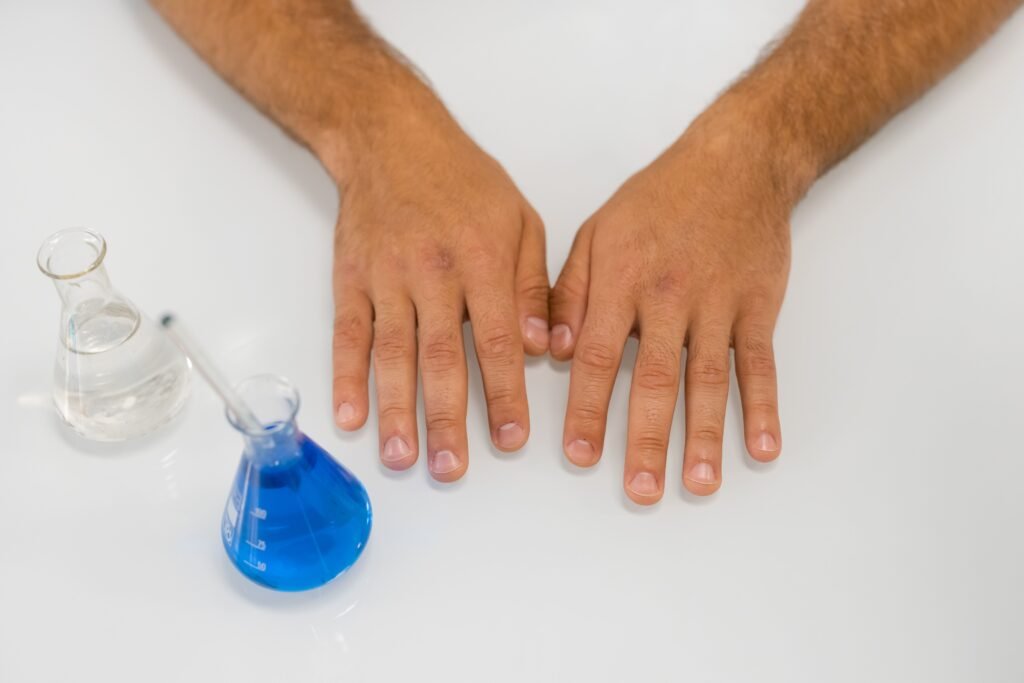
Nailfold Capillaroscopy is a simple, non-invasive examination that allows doctors to look closely at the tiny blood vessels located around the fingernails. These small vessels can provide useful information about changes in microcirculation and may support the evaluation of certain vascular or rheumatic conditions. Nailfold Capillaroscopy in Ashok Vihar can be considered when a doctor wants a closer look at the small blood vessels around the nailfold area.
Dr. Kiran Seth focuses on understanding the patient’s symptoms and clinical findings before recommending an appropriate examination. Nailfold Capillaroscopy can be one part of this overall assessment.
Want a direct connection with us on WhatsApp? Click now.
What Is Nailfold Capillaroscopy?
Nailfold Capillaroscopy is a diagnostic examination used to observe capillaries in the skin around the fingernails. The nailfold is particularly useful for this purpose because the tiny blood vessels in this area can be viewed more clearly than many capillaries located deeper within the skin.
During the examination, a specialised microscope or magnifying device is used to examine the capillaries. The process does not usually require needles, injections, or tissue removal.
The doctor may assess the arrangement, shape, size, and appearance of the visible capillaries. These observations can help identify whether the microvascular pattern appears typical or shows changes that may need further clinical evaluation.
Why Are Blood Vessels Near the Nails Examined?
The tiny blood vessels around the nails are part of the body’s microcirculation. Changes in their appearance may sometimes be associated with underlying vascular or connective-tissue conditions.
For this reason, examining the nailfold can give a doctor additional information when a patient has symptoms such as changes in the fingers, circulation-related concerns, or other findings that require closer assessment.
However, capillaroscopy is not generally interpreted on its own. Dr. Kiran Seth may consider the findings alongside the patient’s symptoms, medical history, physical examination, and other relevant investigations.
How Does Nailfold Capillaroscopy Work?
Before the Examination
In most cases, the doctor will first discuss the patient’s symptoms and relevant medical history. The fingers may be examined to ensure that the nailfold area is suitable for assessment.
The procedure itself is generally straightforward. A small amount of oil or another suitable medium may be used on the nailfold to improve visibility.
During the Examination
The patient places the finger in a comfortable position while the doctor examines the nailfold under magnification. The capillaries can then be viewed and assessed in detail.
The examination is generally quick and does not involve cutting or puncturing the skin. This makes it a useful option when a doctor needs visual information about small blood vessels without an invasive procedure.
After the Examination
Once the examination is complete, the doctor reviews the observed vascular pattern. Depending on the clinical situation, additional tests or follow-up may be recommended.
Nailfold Capillaroscopy should be viewed as part of a broader medical assessment rather than as a standalone diagnosis.
What Can Nailfold Capillaroscopy Help Assess?
Nailfold Capillaroscopy can provide information about the structure and appearance of small blood vessels near the nails. Doctors may use these observations when evaluating certain rheumatic, connective-tissue, or microvascular concerns.
Some features that may be examined include:
- Capillary shape and size
- Arrangement of capillaries
- Changes in the number or visibility of capillaries
- Areas where the vascular pattern appears unusual
- Other visible changes in the nailfold microcirculation
The significance of any finding depends on the patient’s overall clinical picture. A doctor should interpret the results rather than relying on an isolated capillaroscopy finding.
Who May Need Nailfold Capillaroscopy?
A doctor may consider this examination when symptoms or clinical findings raise questions about small-vessel circulation or certain connective-tissue conditions.
For patients looking for Nailfold Capillaroscopy in Ashok Vihar, discussing the symptoms with an experienced clinician can help determine whether the examination is appropriate.
Dr. Kiran Seth can evaluate the patient’s concerns and decide whether nailfold assessment or another investigation would be more suitable.
Is Nailfold Capillaroscopy Painful?
One of the useful features of nailfold capillaroscopy is that it is non-invasive. The examination does not normally require a needle or incision. The finger is simply positioned for observation under magnification.
Patients may still have questions or concerns before undergoing the examination. Discussing these concerns with the doctor beforehand can make the process more comfortable and understandable.
What Happens After an Abnormal Finding?
An unusual capillaroscopy pattern does not automatically mean that a person has a specific disease. The finding needs to be interpreted in relation to symptoms, examination results, and medical history.
If further evaluation is necessary, the doctor may recommend additional investigations or specialist follow-up. This helps prevent conclusions from being made based on a single test.
Frequently Asked Questions
What is Nailfold Capillaroscopy used for?
Nailfold Capillaroscopy is used to examine the tiny blood vessels around the fingernails. It can provide useful information about the appearance of microcirculation when certain vascular or rheumatic conditions are being evaluated.
Is Nailfold Capillaroscopy an invasive test?
No. Nailfold Capillaroscopy is a non-invasive examination. It involves observing the blood vessels around the nailfold with magnification rather than taking a tissue sample or making an incision.
How long does Nailfold Capillaroscopy take?
The duration can vary depending on how many fingers need to be examined and the clinical purpose of the assessment. The examination itself is generally straightforward and does not require a lengthy procedure.
Can Nailfold Capillaroscopy diagnose a disease by itself?
Not usually. Capillaroscopy findings are interpreted together with symptoms, medical history, physical examination, and other relevant investigations. An unusual appearance does not automatically confirm a particular condition.
Where can I get Nailfold Capillaroscopy in Ashok Vihar?
If you are considering Nailfold Capillaroscopy in Ashok Vihar, consult Dr. Kiran Seth to discuss your symptoms and whether nailfold vascular assessment is appropriate for your situation.
Conclusion
Nailfold Capillaroscopy provides a close view of the tiny blood vessels around the nails and can give doctors valuable information about microcirculation. Because the examination is non-invasive, it can be useful when certain vascular or rheumatic concerns need further assessment.
The results should always be considered alongside the patient’s symptoms and other clinical information. If you are looking for Nailfold Capillaroscopy in Ashok Vihar, speaking with Dr. Kiran Seth can help you understand whether this examination is suitable for your needs and what the next steps may be.